
Database Server: The Core Engine of Enterprise Data Management, Unlocking a New Paradigm for Efficient Operations
In today's era of sweeping digital transformation, enterprise data volumes are exploding. From customer information and transaction records to business reports, massive datasets have become core corporate assets. How to securely store, efficiently manage, and rapidly access this data directly impacts operational efficiency and market competitiveness. As the core hardware-software integration for data management, the Database Server is emerging as the critical infrastructure underpinning enterprise digital transformation.
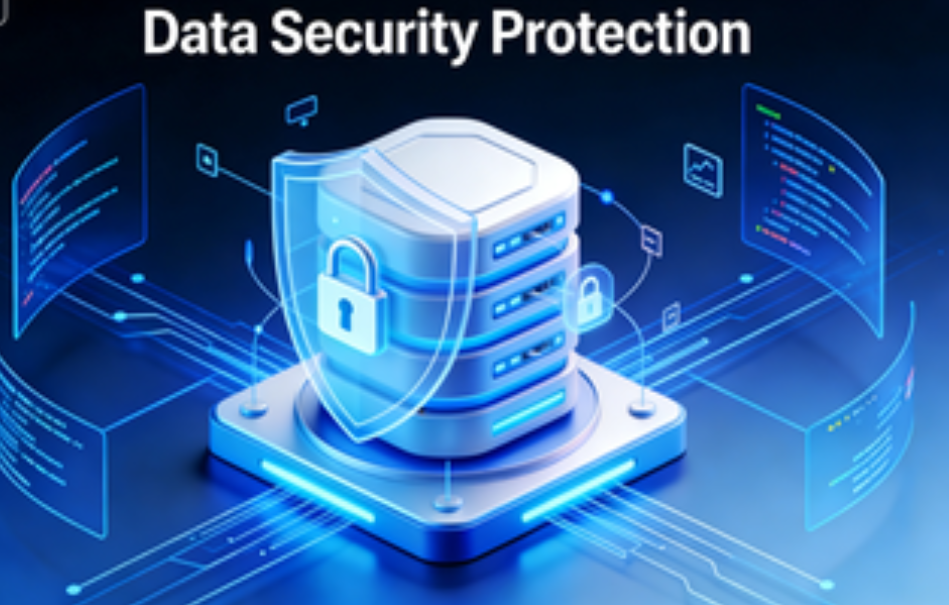
What Is a Database Server? The Synergistic Core of Hardware and Software
A database server is not a single device but a complete system composed of specialized hardware and database software. It is dedicated to providing database services to clients and serves as an indispensable key component in client-server computing environments.
From a hardware perspective, database servers must handle massive data storage and high-frequency data processing tasks. Therefore, they typically utilize high-configuration, specialized high-end computers: large-capacity storage devices ensure secure storage of petabyte-level data, while high memory density guarantees efficient data retrieval and computation, preventing processing delays caused by insufficient memory.
Software-wise, the core of a database server is the database instance—the backend database application. Composed of a series of memory structures and background processes, it handles database file access and management while responding to diverse client data requests. Different types of database management systems (DBMS) cater to distinct server application scenarios. For instance, MySQL provides database access services through a client-server model, making it suitable for enterprise-level multi-user collaboration scenarios. SQLite, on the other hand, is primarily used for embedded databases, meeting the local data management needs of small devices.
Core Functions of Database Servers: More Than Just Storage—The All-Round Assistant for Enterprise Data Operations
Routine Processing and Management of Massive Data
For industries like e-commerce, finance, and internet services, millions or even billions of transaction records and user behavior data are generated daily. Leveraging robust hardware performance and optimized software algorithms, database servers efficiently handle large-scale data operations—including insertion, querying, updating, and deletion—ensuring timely and accurate processing to safeguard business continuity. This capability is the core reason why “enterprise-grade database server solutions for massive data processing” have become a hot industry demand.
Database Security Protection and Failure Recovery
Data security is the lifeline of an enterprise. Database servers enforce predefined security constraints within the DBMS to comprehensively manage all connected clients, centrally handle database access requests, and prevent security risks such as unauthorized access and data breaches. Simultaneously, database servers feature robust fault recovery mechanisms. Through functions like data backup and log recording, they enable rapid data restoration during unexpected events such as hardware failures or software anomalies, minimizing data loss to the greatest extent possible. This is also the key reason why “Database Server Data Security Protection and Fault Recovery Strategies” are receiving significant attention from enterprises.
Precise Control of Multi-User Concurrent Access
In daily enterprise operations, simultaneous database access by multiple departments and users is commonplace—such as sales teams querying customer information, finance departments analyzing transaction data, and operations teams updating activity records. Database servers establish secure, stable multi-user environments supporting simultaneous access by numerous users. This ensures efficient data retrieval while concealing DBMS details through permission isolation and data encryption. Such measures prevent client operations from disrupting the database system, achieving “Database Server Performance Optimization Under Multi-User Concurrent Access.”
Efficient Application and File Storage Alternative
Compared to traditional file servers, database servers offer superior efficiency and security when storing applications and non-database files. Through structured data management, database servers rapidly index files to accelerate retrieval speeds. Coupled with robust permission controls and backup mechanisms, they ensure secure and traceable file storage. This makes them the preferred choice for increasingly more enterprises replacing traditional file servers. “Database servers as efficient storage alternatives to file servers” has become a key pathway for businesses to reduce costs and enhance efficiency.
Database Server Operation Principles: Efficient Client-Server Collaboration
The database server's workflow revolves around the core logic of “Request - Process - Response,” forming a closed-loop data interaction:
Storing Core Resources: The database server locally stores the DBMS and the database itself, serving as a “central repository” for data and centrally managing all structured data.
Receiving Client Requests: Clients send requests for data queries, modifications, or storage to the database server through front-end applications (e.g., enterprise management systems, mobile apps) or back-end management programs.
Standardized Interface Invocation: Utilizing APIs based on the ODBC (Open Database Connectivity) standard, clients and servers achieve cross-platform, cross-database communication, ensuring compatibility and stability in request transmission. This process requires both client and server sides to be equipped with corresponding support software;
Data Processing and Result Feedback: After receiving a request, the server rapidly retrieves the required data through the database instance, completes computational or modification operations, and then feeds the processed results back to the client, enabling efficient data flow.
In complex enterprise applications, database servers often adopt a master-slave architecture: the master server serves as the core data storage node, handling data writes and updates; slave servers act as replicas of the master, performing tasks like data queries and backups. This reduces load on the master server while enhancing fault tolerance for data access—the core value of “master-slave architecture database server deployment and operations.”
Selecting the Right Database Server to Fortify Your Enterprise's Digital Foundation
Whether managing daily data operations for SMBs or supporting complex business workloads for large corporations, database servers play an irreplaceable role. They serve not only as data storage containers but also as the core engines driving enterprise data flow, security protection, and efficient computation. As digital transformation deepens, demands for “cost-effective database server selection” and “database server performance optimization techniques” will continue to grow.
To gain comprehensive mastery of database server technical details, selection criteria, and operational methodologies, start with foundational knowledge and delve deeper through professional resources: What-is-a-Database-Server. Only by selecting a database server that aligns with your specific business needs can you truly transform data assets into competitive advantage and navigate the digital wave with steady progress.